
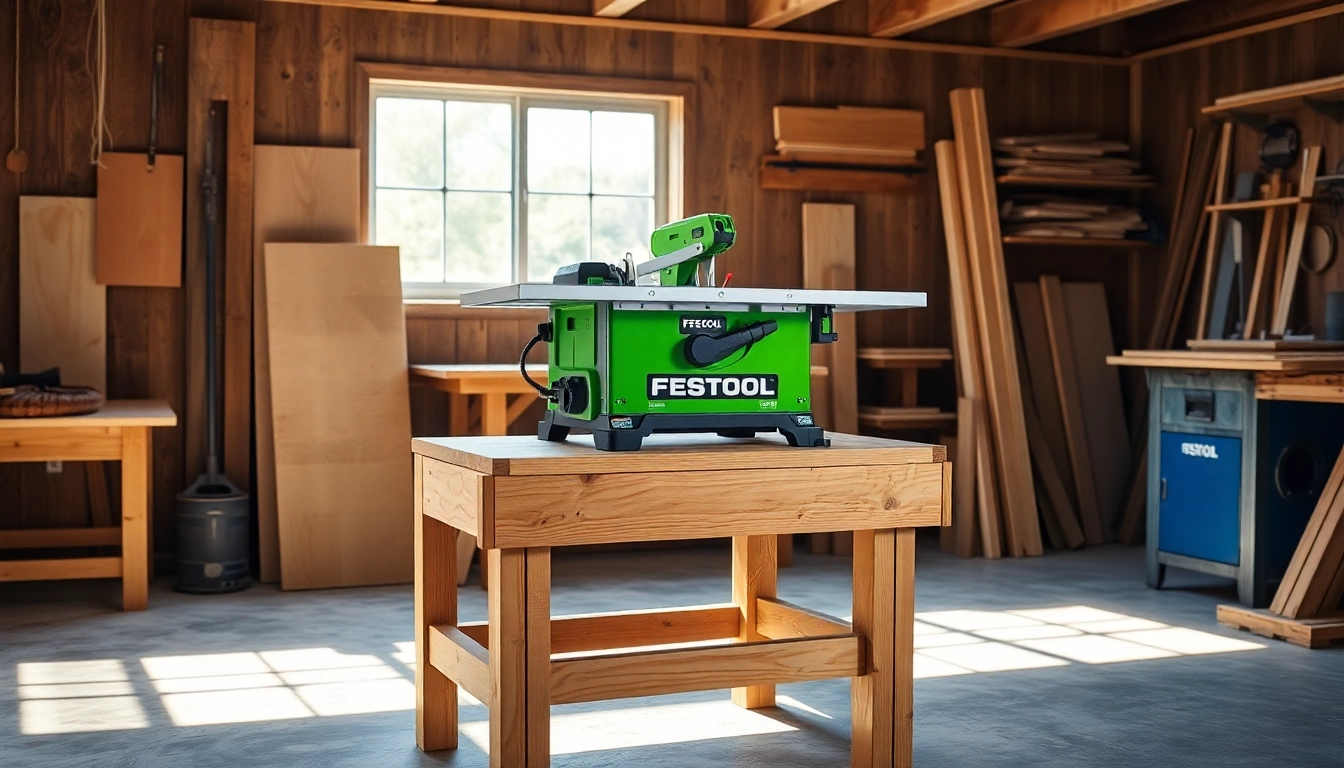
Understanding the Festool Table Saw
The Festool table saw is a revolutionary tool designed for precision and efficiency in woodworking. Renowned for its superior craftsmanship and innovative features, the Festool table saw caters to both professional carpenters and DIY enthusiasts. This in-depth guide will explore what makes the Festool table saw stand out in the woodworking realm, detailing its unique features, types of cuts achievable, and much more.
What Makes the Festool Table Saw Unique?
The Festool table saw is distinguished by its combination of power, portability, and performance. Unlike traditional table saws, which can often be cumbersome and challenging to maneuver, the Festool design emphasizes a lightweight structure without compromising cutting capabilities. This balance is crucial for users who transition between job sites or need to store equipment in limited spaces.
Moreover, the Festool table saw integrates advanced safety features, such as active blade technology, which minimizes the risk of accidents. The use of high-quality materials also ensures durability, allowing the tool to withstand the rigors of regular use while maintaining its precision cutting performance.
Key Features of the Festool Table Saw
- High-Precision Cutting: Equipped with precise fence adjustments and reliable calibration settings, ensuring consistent cuts.
- Powerful Motor: It features a robust motor that delivers consistent power output, suitable for various wood densities.
- Dust Extraction: Integrated dust collection systems that keep the workspace clean, enhancing visibility and safety.
- Portability: The design allows for easy transportation, with foldable stands and transport-friendly accessories.
- Versatility: Capable of making various cuts, including rip cuts, crosscuts, and repetitive cuts, ideal for a wide range of projects.
Types of Cuts You Can Achieve
The versatility of the Festool table saw enables it to perform various cutting techniques, making it suitable for a range of woodworking tasks:
- Rip Cuts: Cutting lumber lengthwise for dimensional projects.
- Crosscuts: Accurate cutting across the grain for furniture pieces and cabinetry.
- Bevel Cuts: Angled cuts for intricate designs and joinery.
- Compound Cuts: Combining both angle and curve cuts for complex shapes.
- Repetitive Cuts: Using jigs and stops for consistent production work.
Setting Up Your Festool Table Saw
Proper setup is essential for optimal performance from your Festool table saw. A well-organized workspace not only enhances your efficiency but also contributes to overall safety during operation.
Choosing the Right Workspace
When selecting a workspace for your Festool table saw, consider the following factors:
- Space: Ensure you have enough room to maneuver around the table saw and materials. Ideally, a work area of at least 10×10 feet is recommended.
- Light: Adequate lighting is crucial for visibility to execute precise cuts.
- Surface: Use a stable, flat surface to set the table saw to prevent vibrations that might affect accuracy.
- Electrical Access: Ensure your workspace has easy access to power outlets for uninterrupted operation.
Essential Accessories for Your Festool Table Saw
While the Festool table saw itself is a powerful tool, several accessories can enhance its function:
- Throat Plates: Custom throat plates for varying material thickness, providing accuracy during cutting.
- Jigs and Fixtures: A range of jigs enables you to make repeatable cuts without constantly measuring.
- Mobile Bases: Enhance mobility and convenience for job site transportation.
- Feather Boards: Useful for holding the material steady against the blade during cuts.
Assembly Instructions
Setting up your Festool table saw typically follows these steps:
- Unpack the components and read the user manual for safety guidelines and specifications.
- Attach the table saw to the mobile base if applicable for better maneuverability.
- Install the blade according to the instructions, ensuring it is correctly aligned and secured.
- Set the fence for calibration, measuring from the blade to the fence for accuracy.
- Test the saw with scrap wood to ensure everything is functioning smoothly before starting on actual projects.
Techniques for Mastering the Festool Table Saw
Mastering the Festool table saw involves understanding various techniques that enhance safety and cutting accuracy.
Safety Practices to Follow
Safety is paramount when operating any power tool. Follow these safety practices:
- Personal Protective Equipment (PPE): Always wear safety goggles and hearing protection.
- Keep Workspace Clear: Ensure no clutter is present near the saw to avoid accidents.
- Use Push Sticks: Employ push sticks for guiding small pieces of wood through the saw, keeping hands at a safe distance.
- Regular Maintenance Checks: Routinely check equipment for any signs of wear or damage before use.
Advanced Cutting Techniques
To truly harness the capabilities of the Festool table saw, consider adopting these advanced techniques:
- Dado Cuts: Using a dado blade to create grooves in the wood for joinery.
- Box Cuts: For creating boxes or boxes without the need for further assembly.
- Freehand Cutting: With practice, users can perform cuts without the guide, giving room for creative projects.
Maintenance Tips for Longevity
Proper maintenance ensures your Festool table saw remains efficient and lasts for years:
- Clean Regularly: Keep the surface free from dust and debris, checking dust extraction systems.
- Inspect the Blade: Regularly check the blade for damage, replacing it as needed to ensure optimal cutting.
- Lubricate Moving Parts: Apply appropriate lubricants to parts like the fence and height adjustment to keep everything operating smoothly.
- Store Properly: When not in use, keep the table saw covered in a dry place to protect it from moisture.
Common Challenges with Festool Table Saw
While the Festool table saw is a reliable tool, users may encounter challenges. Recognizing these challenges and knowing how to address them is key for any operator.
Troubleshooting Common Issues
Common issues users might face include:
- Inconsistent Cuts: Often a result of improper blade alignment or a dull blade. Routine checks can mitigate this.
- Motor Won’t Start: Check for power issues, including tripped breakers and cord damage.
- Excessive Vibration: This may indicate that the saw is not stable or that components need adjustment.
Upgrading Components for Better Performance
To improve your Festool table saw’s functionality:
- Replace the Blade: Invest in high-quality blades suited for different materials to enhance cutting.
- Upgrade the Fence: A more precise or upgraded fence can lead to better accuracy and ease of use.
- Additional Dust Collection: Consider enhancing the dust collection system for cleaner workspaces.
How to Avoid Common Mistakes
To ensure efficient operation and safety:
- Measure Twice: Always double-check measurements before cutting to avoid waste.
- Don’t Force Cuts: Let the saw do the work—forcing can lead to injury and poor-quality cuts.
- Follow Procedures: Adhere to the manufacturer’s guidelines for setup, cutting, and maintenance.
Measuring Performance and Results
Assessing the performance of your Festool table saw involves monitoring key metrics and outcomes from your projects.
Performance Metrics to Monitor
Key performance indicators for your Festool table saw include:
- Cut Accuracy: Check the precision of your cuts with a square and measuring tools.
- Speed of Operation: Time how long it takes to complete standard cuts to establish benchmarks.
- Material Quality: Inspect the finish of cuts for signs of tearing or rough edges that may need adjustments in technique.
Real-World Projects Using Festool Table Saw
Various projects can effectively demonstrate the capabilities of the Festool table saw, including:
- Custom Furniture Making: Use the table saw for building unique desks, tables, and chairs.
- Cabinetry: Crafting cabinets requires precise cuts, ideal for achieving symmetry and aesthetic appeal.
- Framing and Structural Work: Accurately cutting framing lumber for structure installations.
Gathering Feedback for Improvement
Collecting feedback from completed projects can dramatically improve the use of your Festool table saw. Consider surveying clients or peers to understand:
- Finish Quality: Their impressions of the project quality.
- Timeline Adherence: Whether projects met scheduled timelines.
- Recommendations: Suggestions for future improvements or equipment adjustments.
FAQs
How do I maintain my Festool table saw?
Regular cleaning, blade inspections, and following the user manual for maintenance will help keep your Festool table saw in excellent condition.
What wood types are best for use with the Festool table saw?
The Festool table saw excels with hardwoods like oak and maple, as well as softwoods like pine. Always adjust blade selection according to the type of wood being cut.
Can I use my Festool table saw for other materials?
Yes, the Festool table saw can tackle various materials beyond wood, including plywood, MDF, and even certain plastics, with the appropriate blade selection.
What safety gear should I use with the Festool table saw?
Essential safety gear includes safety glasses, hearing protection, dust masks, and appropriate clothing to prevent accidents.
How can I optimize my setup for better performance?
Optimize your setup by ensuring proper blade alignment, utilizing high-quality blades, regularly maintaining the saw, and setting up effective dust extraction to keep the workspace clean.
